
Three-Point Revolution: The Tactical Shift Redefining the Modern NBA 2024-25 Season
The Math Problem That Solved Basketball
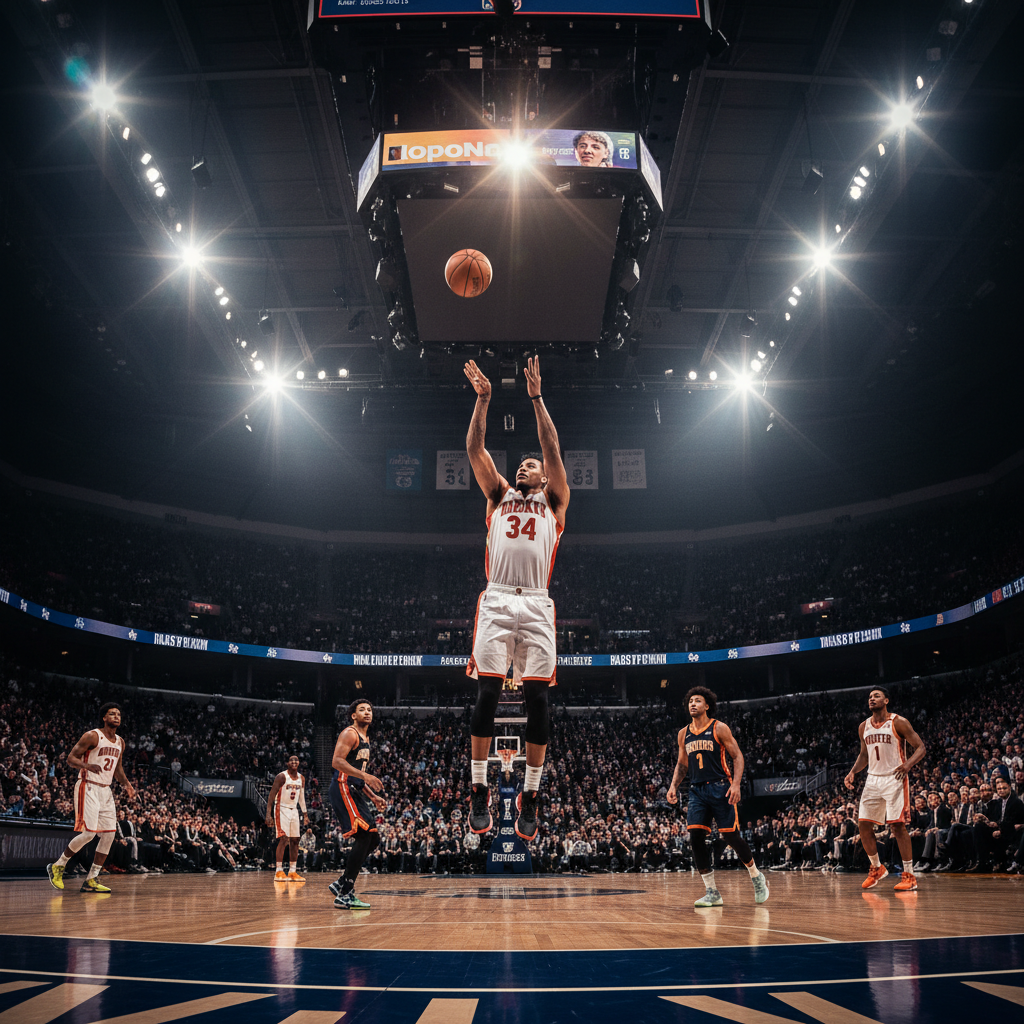
The NBA has reached a mathematical tipping point. While the "three-point revolution" isn't a new phenomenon, the 2023-24 and 2024-25 seasons have witnessed a shift from a tactical advantage to an absolute requirement. Teams are no longer just shooting more; they are reshaping their entire offensive identities to maximize PPS (Points Per Shot) through volume and spacing.
This season, the league average for three-point attempts per game has climbed to nearly 36 per team, a staggering increase from a decade ago. But it’s not just about the volume. Coaches like Joe Mazzulla in Boston have weaponized the arc, treating the three-pointer as a primary defensive-shattering tool rather than a secondary option. The Celtics’ historic efficiency proves that if you take enough high-quality looks, the variance eventually bends in your favor.
Tactical Evolution: Beyond the Arc
Modern offenses are prioritized by "five-out" spacing, where even centers are expected to be threats from deep. This evolution has forced a crisis for traditional rim protectors. According to NBA.com/stats, teams that shoot over 40 three-pointers per game win at a significantly higher clip than their mid-range-reliant counterparts.
The Rise of the 'Relocation' Three
The most dangerous trend this season is the relocation three. Moving beyond catch-and-shoot scenarios, players like Tyrese Haliburton and Luka Dončić are using step-backs and side-steps to create space in late-clock situations. The league average eFG% (Effective Field Goal Percentage) continues to rise as mid-range jumpers—long the staple of 90s basketball—are being phased out in favor of rim pressure and corner threes.

Comparing the League's Perimeter Powerhouses
To understand the impact of this revolution, we must look at the teams leading the charge. The disparity between the "modern" offenses and those still clinging to traditional sets is reflected in the standings.
| Team | 3PA per Game | 3P% | Offensive Rating |
|---|---|---|---|
| Boston Celtics | 42.5 | 38.1% | 122.2 |
| Golden State Warriors | 39.2 | 37.5% | 118.4 |
| Dallas Mavericks | 38.0 | 36.9% | 117.1 |
| League Average | 35.4 | 36.5% | 115.0 |
The defensive response to this surge has been desperate. Finding players capable of "switching one through five" is the current priority for general managers. As analyzed in our breakdown of Elite Stoppers: The Top NBA Defensive Players Ranked for 2024, the value of a perimeter-mobile big man has never been higher.
The Impact on Star Power
The "Deep Three" has become a psychological weapon. When a player hits a shot from the logo, it doesn't just count for three points; it breaks the defensive scheme's spirit. Stephen Curry remains the gold standard, but the emergence of 7-footers like Victor Wembanyama taking—and making—transition threes signals the next phase of this evolution.
"If you aren't shooting 35 threes a night, you're playing 20th-century basketball in a 21st-century league. The math simply doesn't add up otherwise."
— Senior NBA Scout via ESPN
For more on how tactical trends are shifting across global sports, check out our analysis of the latest coaching innovations at The Athletic. While basketball focuses on the arc, football is seeing its own revolution in spatial awareness, as seen in the tactical battles involving the world's best players.
Prediction: Where Does the Ceiling Exist?
Is there a point of diminishing returns? Some critics argue the game is becoming "homogenized," with every team running the same sets. However, the data suggests we haven't hit the ceiling. We are likely heading toward a future where 50 three-point attempts per game becomes the benchmark for elite offenses.
The revolution is no longer about if you shoot the three, but how you create it. As defenses get faster, the release times get shorter. The game has never been more skilled, more spaced, or more explosive. The three-pointer won the war of efficiency, and now, we are simply living in its aftermath.